

Articles

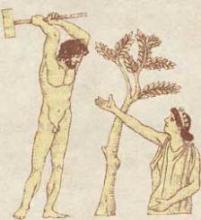
Prince Erysichthon and Demeter

From the Hymn to Demeter of Kallimachos we will see how the Goddess managed the disrepsectul young prince Erysichthon and what was his ending.

Kallimachos was born in Kyrene in 305 b.C. and he died in Alexandria in 240 b.C. His father was a general. When he was young he lived in Alexandreia, the most important city of philosophy. His teachers were Aratos and Hermocrates. He found a job in the famous library of Alexandreia and he nearly reached the headmaster position. He was a prominent author of reviews and studies. He wrote Pinakes (indexes), a monumental book with all the spiritual treasures that were written in the library. He read and knew a lot of books by heart. In his poetic writings we find Aitia, Epigrammata, Ekale, Iamboi, Hymns etc.

Offering: Pitta Bread With Oregano and Saffron

This is a recipe for homemade pitta bread to be used as an offering to Goddess Hekate.

Offering: Lemon Juice with Honey and Saffron

Offering a juice to the Goddess or drinking it to attune with her energies. The juice has also the energy of happiness.

Elaphebolia

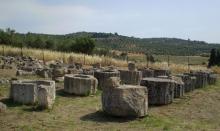
In the ancient city of Hyampolis from the copper era (2000 b.C.) the Goddess Artemis and the God Apollo were worshipped until the Byzantine period of 4th century a.C. For many centuries in that area, Artemis was the main Goddess (at least from 13th century b.C.). From this area, the cult of Apollo expanded and went to Athens. The modern name of Hyampolis is Kalapodio. In 1973 German archaeologists under Rainer Felsch discovered the temple of Elaphivolos Artemis. The epithet means deer hunter. The temple is similar to Parthenon of Athens. Some people also believe that the same artist, Iktinos was the designer.

Idolatry

The ancient Hellenes didn't believed in idolatry, the had a complicated religion full of Gods. Using the oracle of Trophonios in Boetia as an example we will see how this worked every time.

There is a several amount of people even in Hellas who believe that ancient Hellenes worshipped statues, so they call them eidololatres and the phenomenon idolatry. In ancient hellenic religion people believed in Gods and Goddesses, energies of the universe, angels, daimones (daimons). The gave to those energies different forms according to their vision or experience. Those forms were the statues. So ancient Hellenes never woshipped statues but the idea behind the statue, the idea that the statue represented.

Hekate's association with the stars

Hekate’s association with the stars can be seen from the other goddesses that she is connected with and their qualities. Hekate appears to be Selene (Moon) in Apollius Rodios and Ovid's Metamorphoses. In the Hellenistic period Hekate was Selene in the sky, Persephone in the Underworld (Hades), Artemis in the Earth. Nonnus (5th century a.C.) is writing that Selene is Hekate of many names. In the PGM we can find hymns and many magickal spells that associate Hekate with Selene, especially hymns to the moon.

Pages

Theurgy and Philosophy are two different methods which lead to the union with God.


Follow on

Subscribe to our Newsletters

Latest Comments

Shrines

Back to Top