Articles

Burial Customs in Kerameikos

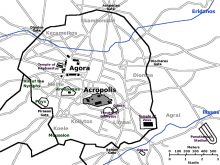
In this article you will read how the ancient Atheneans used to bury their dead, how they saw death from 3000 b.C.until the Roman period 300 a.C. The place we will use as a focal point is the Kerameikos, a part of Athens which was really important for daily life in ancient periods. Kerameikos is a crossroads between sacred way of Eleusis, a sacred way to Demosion Sema, the graves of all highli respected warriors and Atheneans and a road to ancient agora. Atheneans used to bury their dead in Kerameikos. The had sacred places for main Gods and Goddesses, special buildings from woman of Aphrodite, laboratories and market full of merchants of wine, food, pottery and artists.

Creating Katadesmos #2

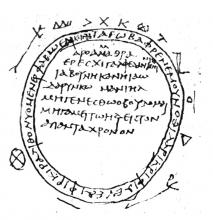
I have already written an article about this subject but I want to expand and share another spell from PGM VII 429-458 In that spell Osiris is called with voces magicae implying their secret names. The interesting thing is that the spell is short and quick but it also requires knot magick if you release the katadesmos in special places, using again the famous voces magicaes ASKEI KAI TASKEI (as the ancient text writes).

This binding spell is very powerful as the ancient text intones. It can cause illness, make enemies, destroy and alter a situation, so use it to promote good magick according to the wiccan rede. Take a lead tablet from a water pipe of cold water. Write with a headless needle made of bronze:

Invocation to the World Creator

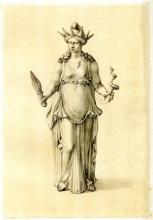
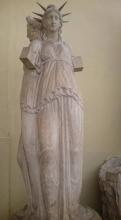
In PGM IV 1716 lies a very effective binding spell called the Sword of Dardanos, the man who founded the mysteries in Samothrace. The island is associated with the Goddess Hekate. It starts with an invocation to the God who created the universe. I have translated and it can be used as a strong invocation to Hekate Soteira or Hekate Panopaia or Hekate Pasikrateia and calling the aspects of Axis Mundi and Queen of the World.

Due to the nature of the ancient invocations, the Witch should have a deep connection with the Goddess, to make the invocation with all of his emotions and vibrating the vowels and pronouncing correctly the voces magicae with all of the energy.

Porphyry About Angels, Gods, Depictions

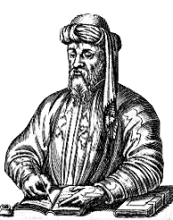
From the 15 books that the neoplatonic philosopher, Porphyry had written in the 3rd century a.C. in order to examine the teachings of students of Christ under the lens of logic and philosophy, nothing has been survived except some fragments from references of other writers that Professor Adolf von Harnack in 1916 collected and reconstructed a book with quotes that most of them are attributed to Porphyry. In this article I have translated a part of the book (the responses of Makarios Magnes) in which Porphyry is presenting a teaching in which angels of christianity and gods of the ancient religion are the same entities and another part from the same book with great meanings.

Create Katadesmos

Katadesmoi in plural, katadesmos in singular are an ancient hellenic magickal technique. It requires a lead tablet and a nail. The desired purpose is simply written in the lead and then it is fold in half and with a nail on the center it is bound. The instructions of how to make a lead tablet efficently for magickal uses could be found in ancient papyri and ancient tablets.

Invocation using PGM XII

Goddess Hekate. The invocation I am going to write derives from the PGM XII 238-245. It is an invocation to the almighty God, but I have modified it slightly to invoke the Goddess Hekate. The invocation is very beautiful, truely poetic. I have added the invocation to a well structured ritual, for anyone who wants to follow it or modify it according to its magickal tradition.

Pages

Theurgy and Philosophy are two different methods which lead to the union with God.


Follow on

Subscribe to our Newsletters
Latest Comments

Shrines

Back to Top