Articles

Porphyry About Leto, Dog, Snake, Hekate

Recently Hekate lead me to the work "About Statues" of the neo-platonic philosopher Porphyry. I was meeting him, many times in references of ancient texts and modern studies. I was impressed when I started to read about him and about his teacher, Plotinos. The philosophical school of neoplatonism seems very interesting for a witch, especially for platonics. In this article we will see how Porphyry is decoding the names and the properties of Gods.

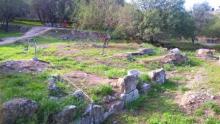
Triangular shrine of Hekate in Athens

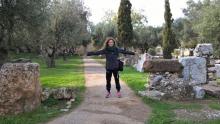
A triangle-shaped open air sanctuary is located just outside the southwest corner of the Agora in Athens. Its position at a crossroad and the triangular shape of its enclosure, the building is indicated to be a shrine of Hekate.

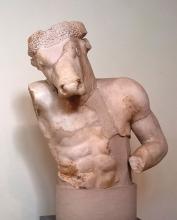
The Sculptor Myron

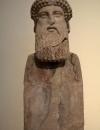
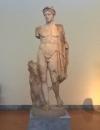
Myron was one of the most significant sculptors in ancient Hellas comparable to sculptor Pheidias. Among many statues that decorated the hellenic civilization of the 5th century BC was a statue of Hekate recorded by Pausanias the Geographer.


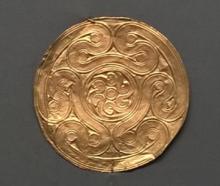
The Strophalos of Hekate

Strophalos or Iynx is an ancient hellenic symbol dated before 2300 b.C. It was connected with the Goddess Hekate and later with Her aspect of Cosmic Soul, sending the Ideas from the Paternal God to the Creator God. Strophalos, triskelion, gammadion-tetraskelion and labyrinth are symbols that look like each other but the uses of strophalos are quite different. Through the help that was provided by the ancient Hellenes writers from Xenophon to Proclus, Damascius and Michael Psellos we will discover the uses, the form and the idea behind the magickal tool of the Witches-Theurgists of Hekate.

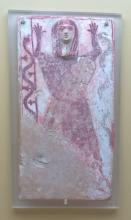
Chthonian Goddess Plaque

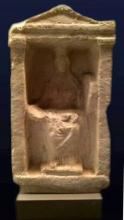
A plaque of the 7th century B.C. depicting a chthonian goddess with snakes was found in Ancient Agora in Hellas. Her characteristics fit to Hekate while similar plaques were found in Eleusis. Considering Hekate's involvement in the Eleusinian Mysteries making a strong connection with the most important religious centre of that time it is quite possible to be Hekate.

Necropolis and Hekate

Necropolis means the city of the dead. The archaeological place of Kerameikos in its biggest part is a necropolis, a place associated with death, religious practices, and art. For the first time, I will present info about Hekateion, the temple of Hekate in necropolis, and a Triangular Hiero of an unknown Goddess, standing in three ways crossroads, next to the way of Eleusis.


Pages

Theurgy and Philosophy are two different methods which lead to the union with God.


Follow on

Subscribe to our Newsletters
Latest Comments

Shrines

Back to Top